
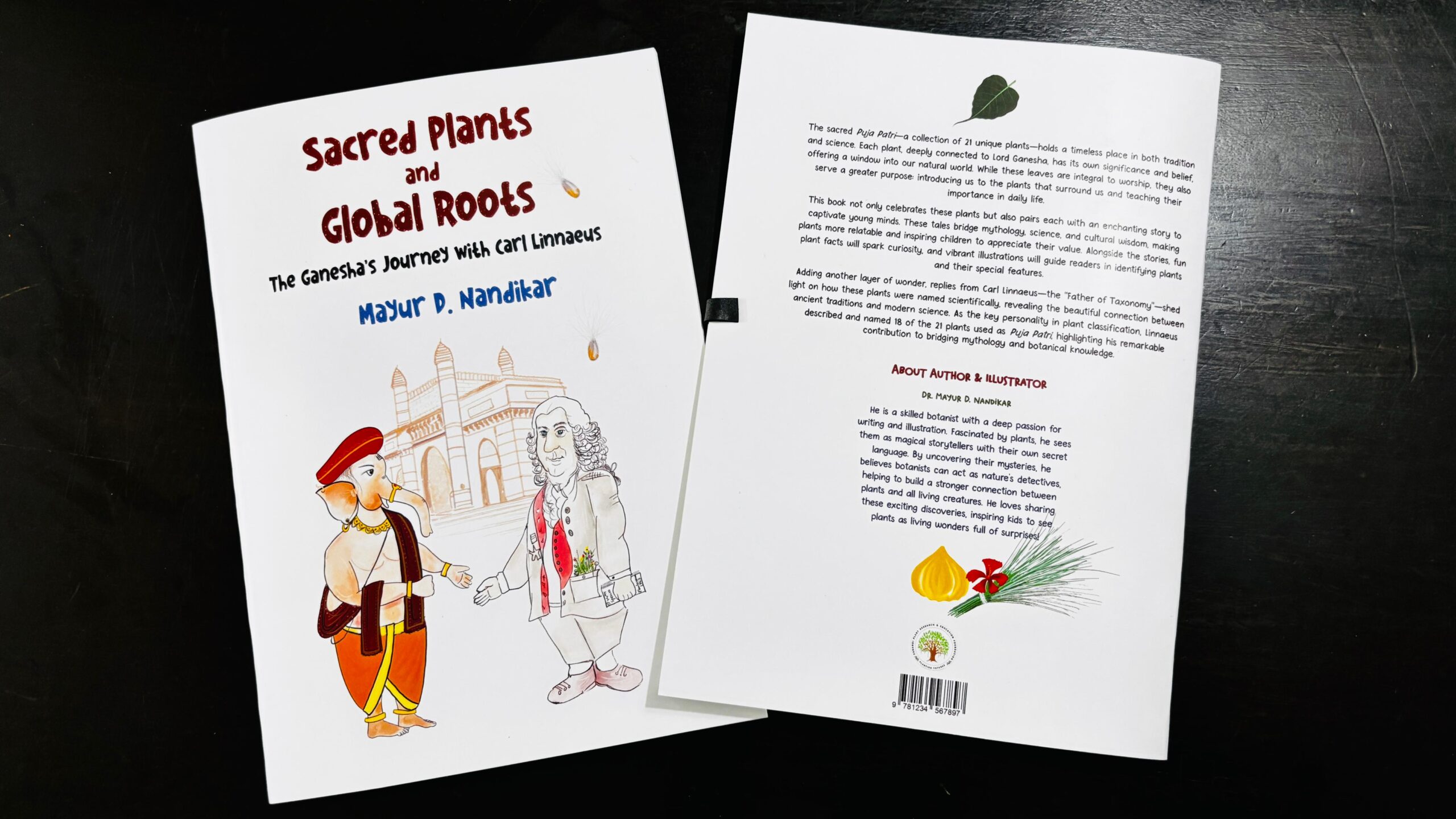
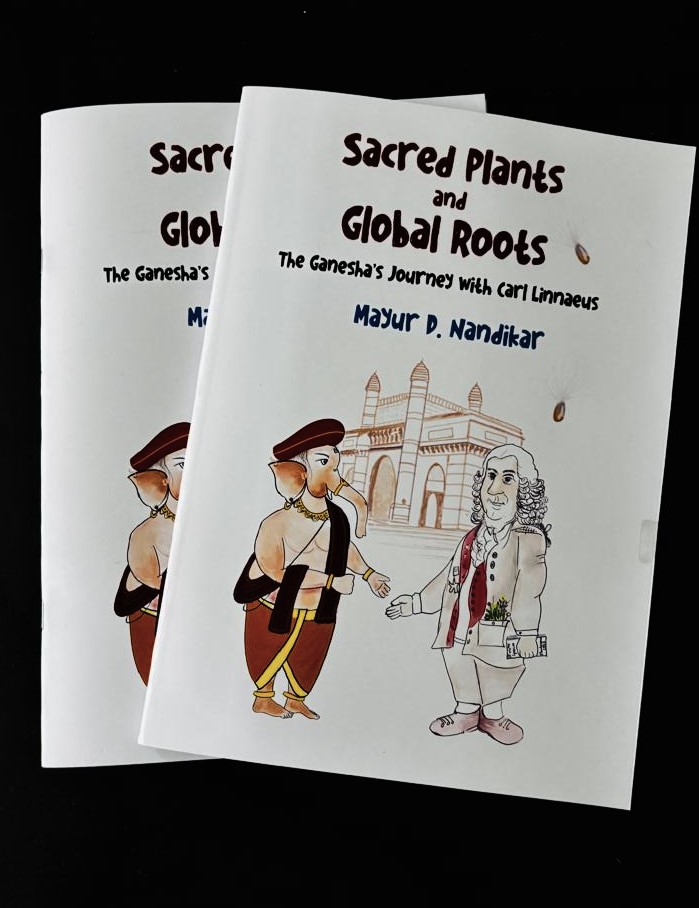
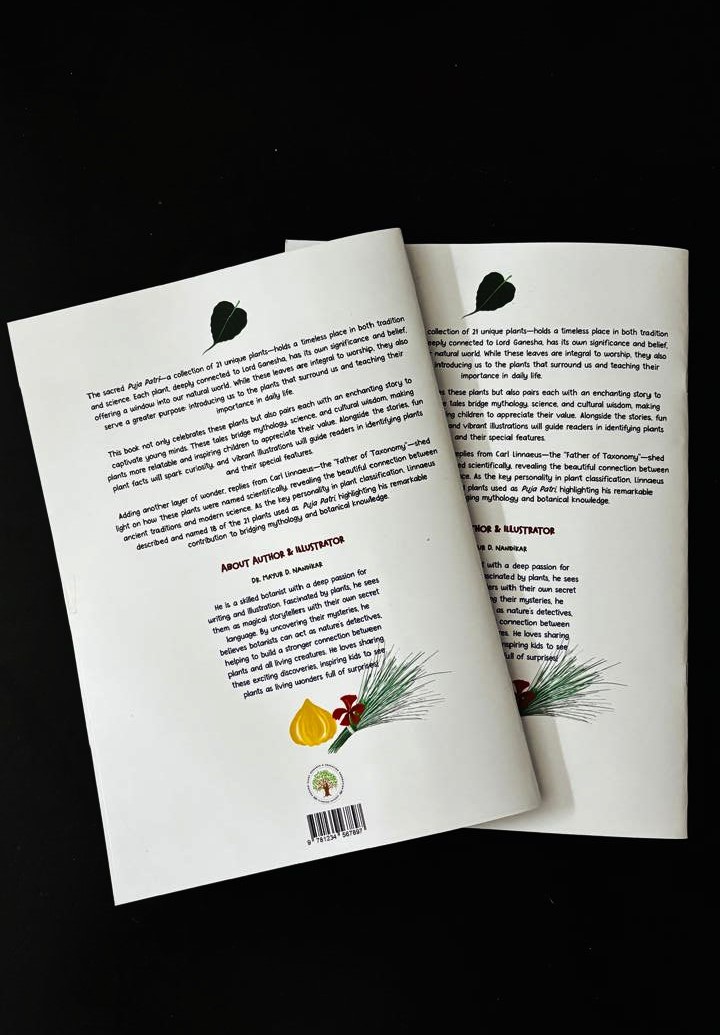
Sacred Plants and Global Roots: The Ganesha’s Journey with Carl Linnaeus!
The twenty-one plants offered to Lord Ganesha during Ganesh Chaturthi, collectively known as “Puja Patri“, are a treasure trove of mythology, tradition, and science. Cherished for centuries, these plants hold deep religious significance, while also being celebrated for their medicinal properties, ecological value, and fascinating histories. Each plant tells a story—a story that connects faith and nature, mythology and science, and the ancient and modern worlds.
For children, these stories can offer a captivating way to understand the natural world. The plants provide glimpses into ones cherished by their beloved deities and can reveal deeper meanings and lessons. From the cooling magic of Durva grass to the heart-healing properties of the Arjuna tree, these sacred plants are revered not only for their symbolic importance, but also for their practical uses in traditional Indian medicine, Ayurveda.
Adding to this rich tapestry is the scientific legacy of the eighteenth-century Swedish botanist Carl Linnaeus. His unifying work in plant classification brought a global dimension to these tales. Many of the plants used in Ganesh Chaturthi rituals were first scientifically described and named by Linnaeus in his monumental work, Species Plantarum, published in 1753. His students travelled far and wide, including to Asia and India, collecting specimens that Linnaeus meticulously studied. Through his work, these plants, rooted in Indian tradition, gained recognition with names that could be used across the world.
Each of the twenty-one plants in this collection has a unique tale rooted in ancient Indian traditions and mythology. These stories are often intertwined with references from Ayurveda, illustrating the plants’ healing powers. They also showcase how the journey of these plants across continents reflects the interconnectedness of cultures and nature. For example, Durva grass (Cynodon dactylon) helped Lord Ganesha defeat a fiery demon, while Linnaeus admired its resilience and cooling properties. Similarly, Tulasi (Ocimum tenuiflorum), revered as the sacred plant (as O. sanctum) of devotion, was classified by Linnaeus as a symbol of global botanical knowledge.
Linnaeus’s contributions can be seen as a bridge between science and mythology. His systematic naming and classification of plants brought order to the natural world, helping scientists communicate and share knowledge universally. These stories of Puja Patri highlight the interconnectedness of ancient wisdom and modern science, inspiring children to explore nature with curiosity and reverence.
This book records the tales of all twenty-one plants offered to Lord Ganesha, with responses to these myths and scientific insights that might have been imagined by Linnaeus. For example, the pomegranate (Punica granatum), symbolizing abundance and wisdom in Indian tradition, also fascinated Linnaeus for its medicinal and cultural significance. Peepal (Ficus religiosa) as keystone species provides food for different creatures and has religious importance. Each story is paired with fascinating facts about the plants, from their ecological roles to their global journeys and their place in Indian culture.
These twenty-one stories, Matoli, Gourai weave a narrative that remind us that plants are more than just resources—they are storytellers, healers, and symbols of unity that connect humanity across time and space. By exploring these tales, children and readers of all ages will gain a deeper appreciation for the plants around them and the timeless stories they carry.
ISBN: 9789334220322
Pages: 55 Publication Year: 2025
Author & Illustrator: Mayur D. Nandikar
This book is free to download (Sacred Plants and Global Roots), a happy read for all nature lovers!
We’d love to hear your thoughts. Please write to mnandikar@gmail.com.





Reviews
There are no reviews yet.